If you are planning a new kitchen, bathroom or fitted bedroom and you have started researching your options, you will have come across the phrase “complete design and installation service” fairly quickly. But what does that actually mean in practice? What should it include, and how does it differ from buying products and arranging installation separately?
Understanding what a genuine end-to-end service looks like will help you ask the right questions and make a more informed decision about who to work with. At Arch KBB, this kind of comprehensive service sits at the heart of every project they take on, from first conversation to finished room.
It starts before the design: the initial consultation
A complete service does not begin when someone starts drawing up plans. It begins with a proper consultation, where the team takes time to understand how you live, what you need from the space, and what you are hoping to achieve. This stage is about listening as much as it is about advising.
Good designers ask about your daily routines, storage priorities, aesthetic preferences and any specific challenges the existing space presents. They will also talk through timescales, budget and how the project fits with any other work happening in the home. This foundation shapes everything that follows.
You can find out more about how Arch KBB aproaches the early stages of a project on their process page, which sets out each stage clearly from initial contact through to completion.
Detailed design and space planning
Once the brief is established, the design phase begins in earnest. This goes well beyond choosing door styles and worktop colours. A thorough design process includes detailed space planning to ensure the layout works properly, consideration of traffic flow and usability, integration of appliances, lighting design, storage planning and material selection.
For kitchens, this means thinking carefully about the working triangle, the location of services, and how the space connects to dining or living areas. For bathrooms, it includes wet room or shower planning, ventilation, heated towel rail positioning and vanity layout. For bedrooms, it means maximising storage within the available space while maintaining a clean, considered aesthetic.
A complete design service will also produce detailed drawings and specifications, so you can see exactly what you are getting before a single item is ordered. At Arch KBB, this level of detail is standard practice rather than an optional extra.
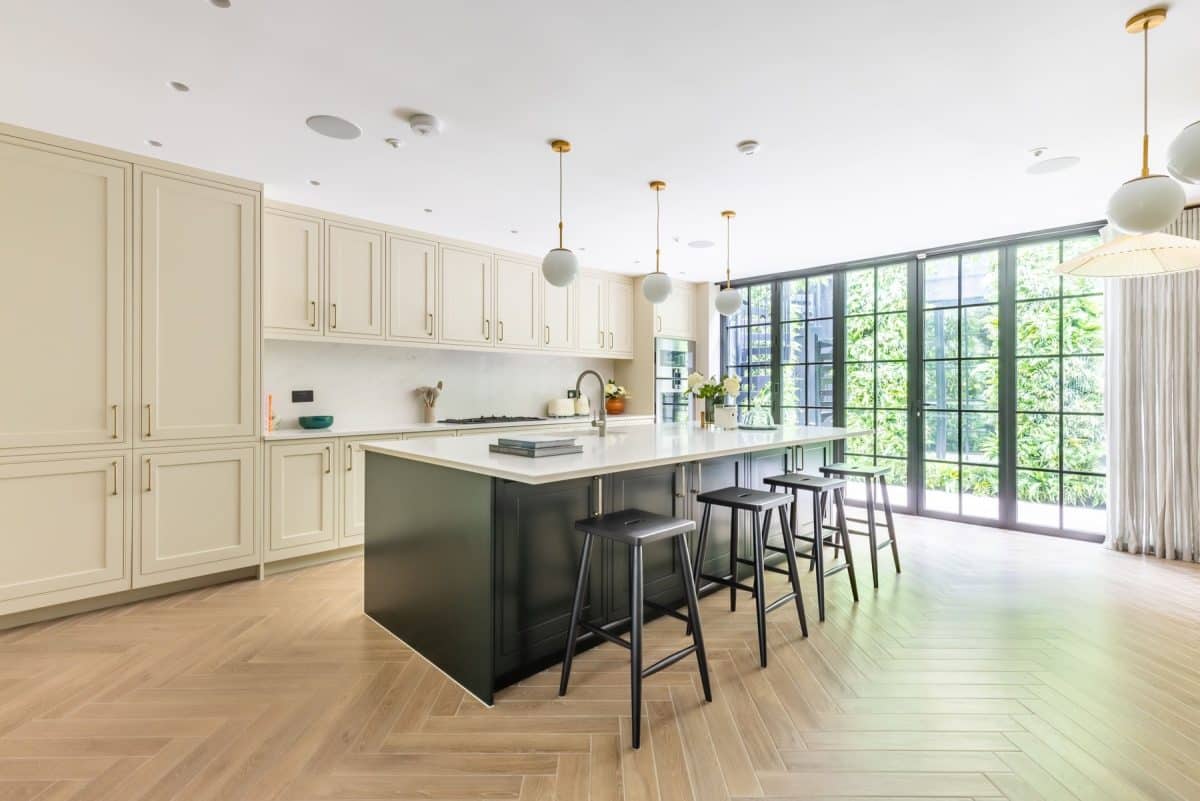
Product specification and supply
In a complete service, the studio takes responsibility for specifying and supplying all of the products required for the project. This includes the cabinetry, worktops, tiling, sanitaryware, brassware, appliances, handles and accessories. Everything is sourced, ordered and quality checked before it arrives on site.
This matters because it removes the risk of the homeowner sourcing products that are incompatible with each other, incorrect in dimension, or simply not available in time. The design and supply are coordinated by the same team, so nothing arrives out of sequence and nothing is missing when installation begins.
Project management and trade coordination
Most kitchen, bathroom and bedroom projects involve multiple trades. Plumbers, electricians, tilers, decorators and fitters may all need to be coordinated, often working in a specific sequence. In a complete service, the studio manages this entire process on your behalf.
That means scheduling trades in the right order, managing deliveries to site, handling any issues that arise during the build and keeping the project on track against the agreed timeline. The homeowner does not need to be the project manager. That role belongs to the studio, which has the experience and relationships to manage it properly.
This is one of the most significant differences between a complete service and a piecemeal approach. Without this coordination, delays compound, costs escalate and the homeowner is left chasing progress rather than looking forward to the result.
Professional installation by specialists
The installation itself, when carried out by a team that knows the products and the design intent, is a very different experience to handing the job over to a separate contractor. Specialist installers understand the nuances of the products they are fitting, the correct sequences and the quality standards expected.
For bespoke kitchens, this means precise levelling, careful worktop templating and correct appliance commissioning. For bathrooms, it means proper waterproofing, accurate tiling and leak-free plumbing connections. For fitted bedrooms, it means seamless cabinetry with doors and drawers that operate perfectly from day one.
When design and installation are handled by the same team, there is no knowledge gap between what was intended and what is delivered.
Aftercare and post-installation support
A genuinely complete service does not end when the fitters leave. It includes a snagging process to identify and resolve any minor issues before the project is formally signed off, and ongoing aftercare support so that if anything needs attention in the weeks or months that follow, you know exactly who to contact.
This aftercare relationship is a mark of a studio that takes pride in its work and values its clients beyond the sale. Arch KBB’s reviews consistently highlight the quality of communication and the team’s attentiveness throughout and after the project, which reflects the studio’s genuinely client-first approach.
If you would like to understand exactly what a complete design and installation service looks like for your specific project, get in touch with the Arch KBB team or visit the Hammersmith showroom to start the conversation.
FAQs
What is included in a complete kitchen design and installation service?
A full service covers the initial consultation, detailed design and space planning, product specification and supply, trade coordination, professional installation and post-installation snagging and aftercare. Everything is managed by the same team, so the homeowner has a single point of contact throughout.
How long does a complete kitchen or bathroom project take from design to installation?
Timescales vary depending on the scope of the project, but a typical kitchen or bathroom renovation managed through a complete service will take several weeks from design sign-off to completion. Your studio will provide a detailed timeline as part of the project planning process.
Do I need to manage the trades myself if I use a complete service?
No. One of the key benefits of a complete design and installation service is that trade coordination is handled entirely by the studio. Plumbers, electricians, tilers and fitters are all scheduled and managed on your behalf.
What happens if there are issues after installation is complete?
A reputable studio will carry out a snagging process before signing off the project and will offer ongoing aftercare support. If anything needs attention after the team has left, you have a clear point of contact who takes responsibility for resolving it.
Is a complete design and installation service more expensive than doing it separately?
The upfront cost may appear higher, but when you factor in the coordination, quality assurance, risk reduction and aftercare, the overall value is typically better. Splitting design and installation often leads to hidden costs through delays, remedial work and warranty complications.