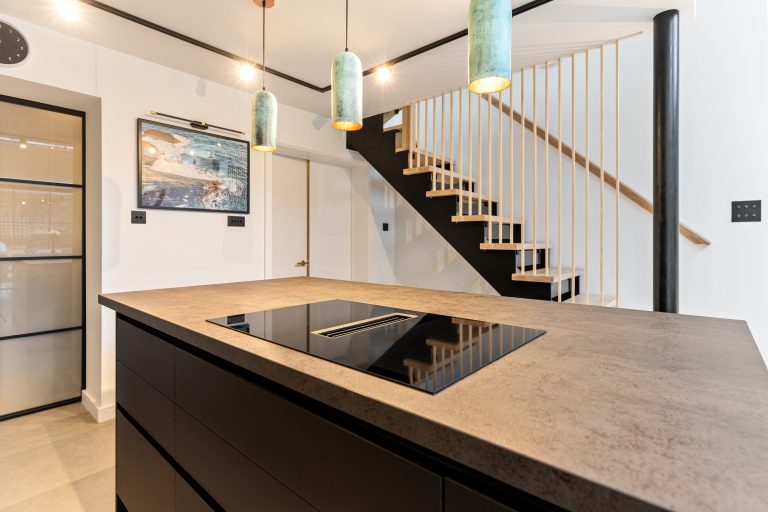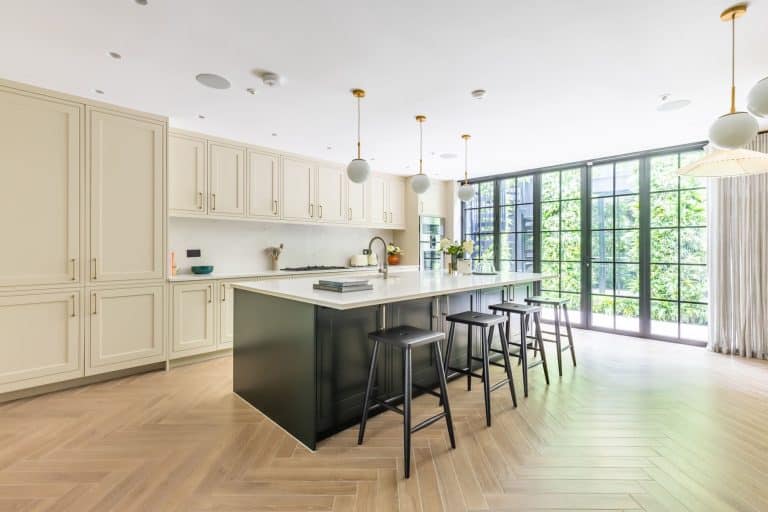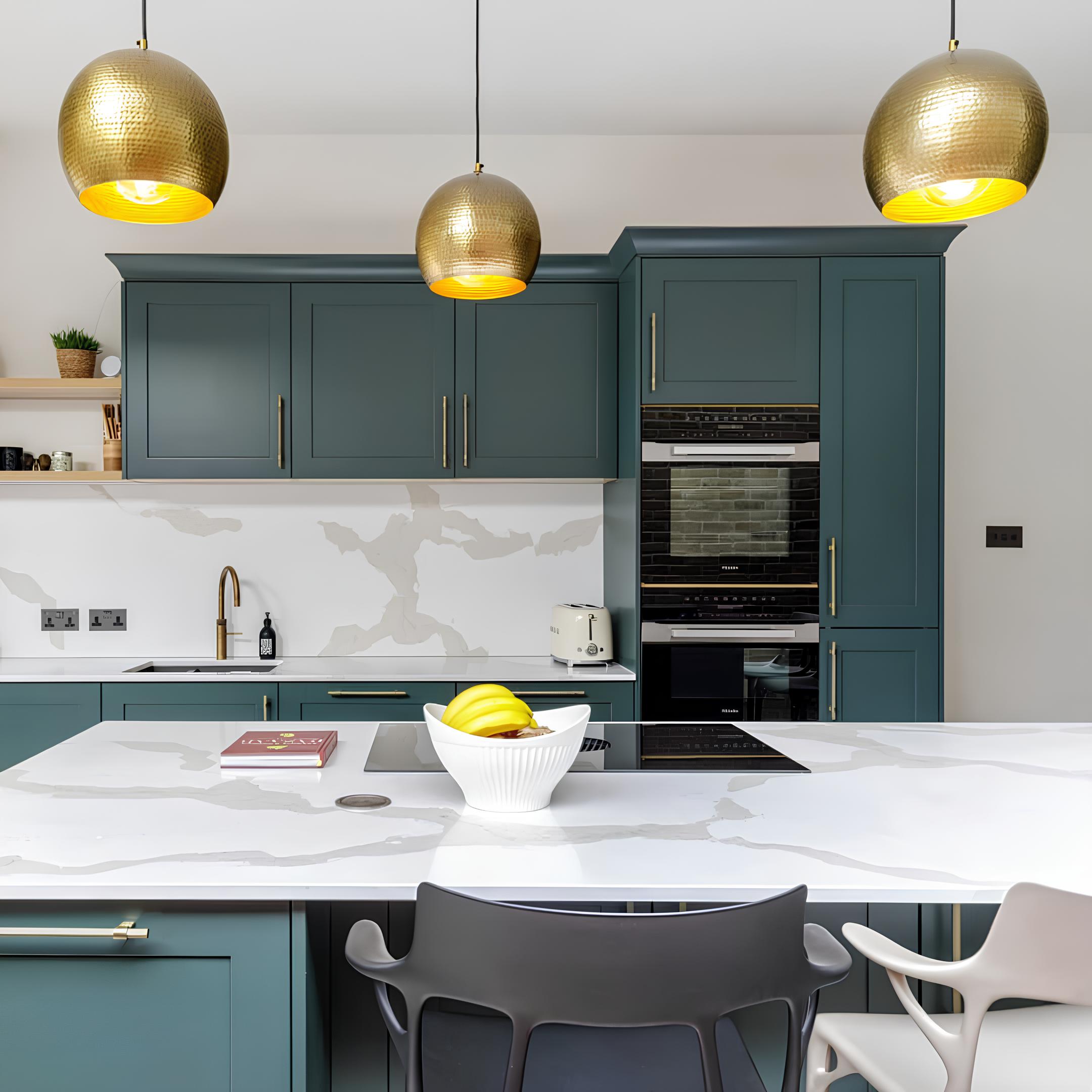
The short answer: quartz is the best all-round worktop for most households. Granite suits buyers who want true natural stone and stronger heat resistance. Porcelain is the premium pick for thin, ultra-resistant surfaces. Wood is the warmest and the most repairable — if you’ll care for it. Solid surface wins for seamless joins and integrated sinks. Laminate remains the honest budget choice.
Your worktop takes more punishment than anything else in the kitchen — hot pans, spills, knives and cleaning products, every single day. It is also the surface you see and touch most. And the advertised price is rarely the fitted price: templating, cut-outs, joins, edges and removal of the old tops can add hundreds of pounds. This guide compares the six mainstream materials on real-world performance and realistic UK installed costs, not showroom claims.
How we’ve priced this guide: all costs are supplied-and-fitted planning ranges for a typical UK kitchen with 4 linear metres of worktop, reviewed in July 2026 against several UK cost guides and trade price examples. They are not Arch KBB quotations. Quotes vary with brand, thickness, edge profile and cut-outs — always compare written quotes line by line.
Quartz worktops — the all-rounder
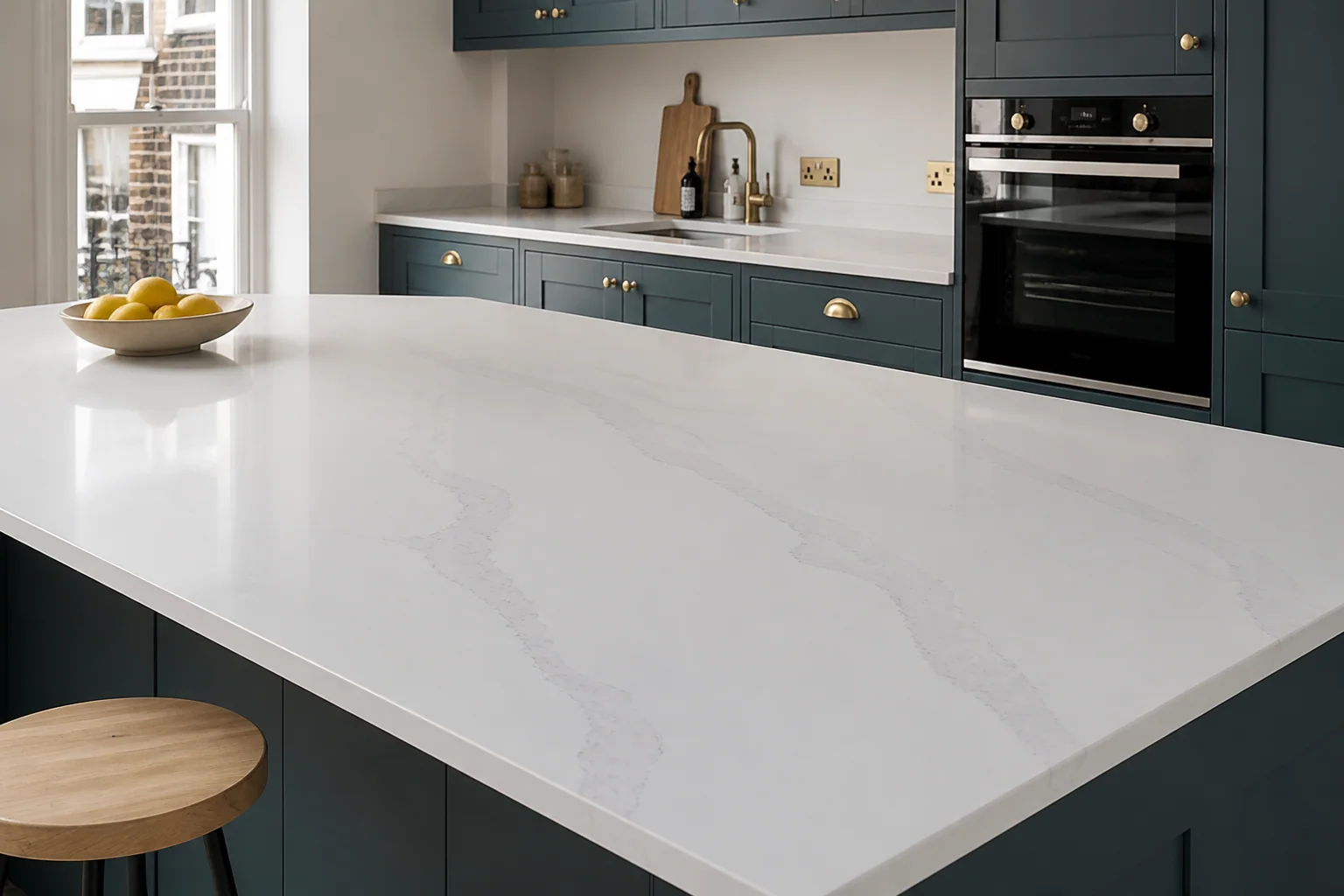
What it is. Engineered stone: crushed mineral bound with resin and pigment. Caesarstone puts the mineral content at up to 90%. Colours range from plain surfaces to convincingly veined designs.
Honest pros. Non-porous — wine, coffee and turmeric wipe off. It never needs sealing, has strong scratch resistance and gives you a consistent pattern across every piece. A realistic lifespan is 25 years or more.
Honest cons. Heat-resistant, not heatproof. Concentrated heat can damage the resin, so use a trivet. Edges can chip under sharp impact; small chips can often be repaired, but larger damage is harder to hide.
Worth knowing. Quartz worktops are not banned in Great Britain. The HSE says dry cutting engineered stone is unacceptable and fabricators must use effective dust controls. Ask who fabricates the surface and how they control silica dust.
Best for: busy households that want premium looks with very little maintenance.
Typical UK installed price: £350–£900 per linear metre — roughly £1,400–£3,600 for a 4-metre kitchen.
At our Hammersmith showroom, you can compare worktop samples with door finishes and see how the colours and textures work together.
Granite worktops — the natural one
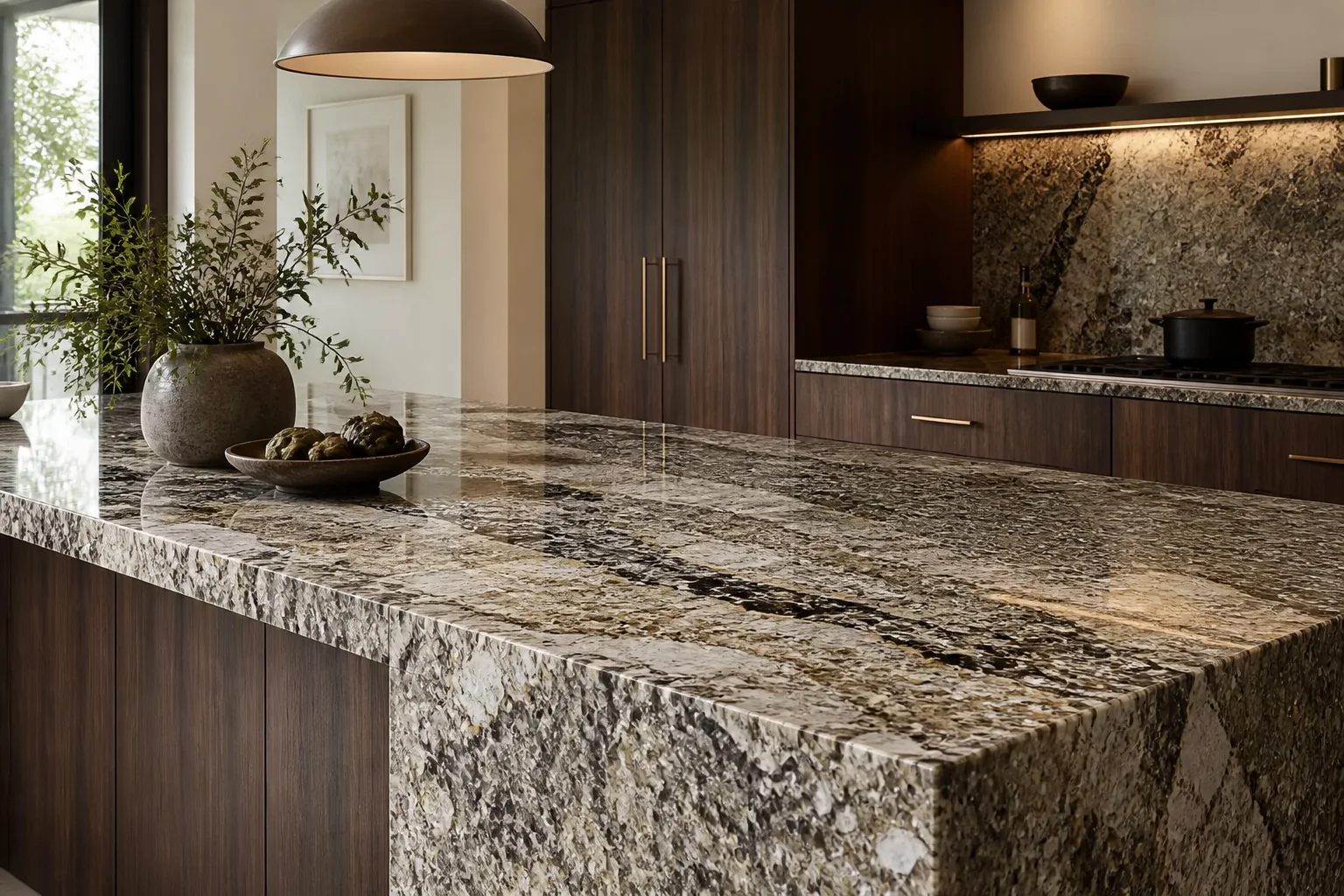
What it is. Real stone, cut and polished. Every slab is one of a kind. That individuality is granite’s main argument against quartz.
Honest pros. Excellent scratch resistance and the best heat tolerance of the mainstream stones. The Natural Stone Institute puts typical heat resistance around 250°C, although a trivet still protects against thermal shock. A realistic lifespan is 25 years or more.
Honest cons. You must accept natural variation: a small sample cannot show a full slab, and joins show where the pattern changes direction. Granite does not automatically need sealing every year. Some stones benefit from it; follow the advice for your specific slab rather than a blanket rule.
Best for: buyers who want a genuinely unique natural surface and value heat tolerance over perfect consistency.
Typical UK installed price: £300–£700 per linear metre — roughly £1,200–£2,800 for a 4-metre kitchen.
Porcelain and sintered stone — the premium newcomer
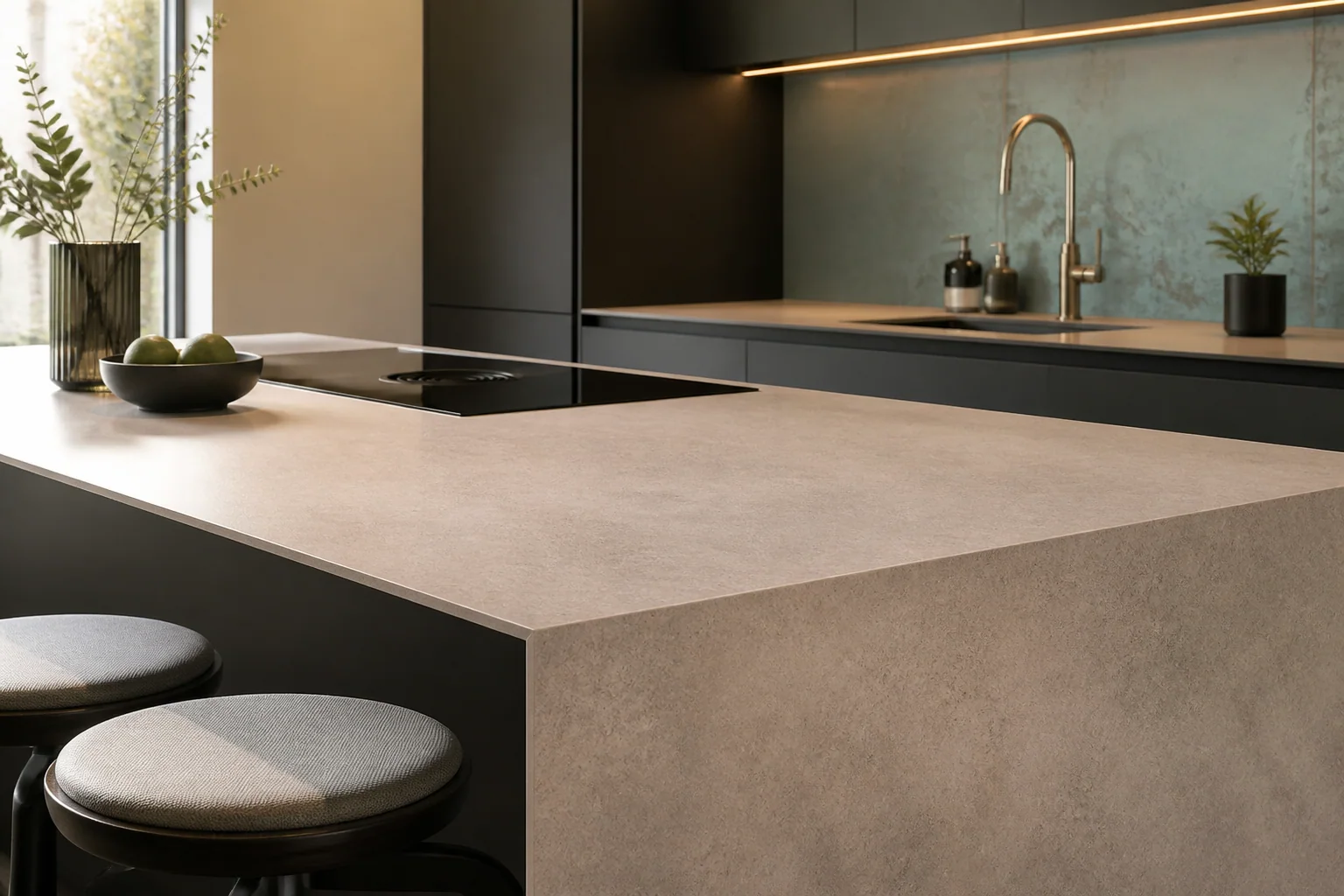
What it is. Large-format porcelain and ultra-compact sintered slabs: extremely dense, almost non-porous and available in thin profiles. Neolith supplies 12mm and 20mm residential worktops, with warranties up to 25 years.
Honest pros. Outstanding heat, stain, scratch and UV resistance; no sealing; and the option of crisp, thin modern edges.
Honest cons. Exposed edges are less forgiving of sharp impact, fabrication needs genuine specialists and serious edge damage is hard to disguise. Highly heat-resistant does not mean indestructible.
Best for: contemporary and handleless kitchens, statement islands and indoor-outdoor living.
Typical UK installed price: £350–£900 per linear metre for standard porcelain; premium ultra-compact surfaces can reach £500–£1,100 — up to £4,400 for a 4-metre kitchen.
Solid wood — the warm one
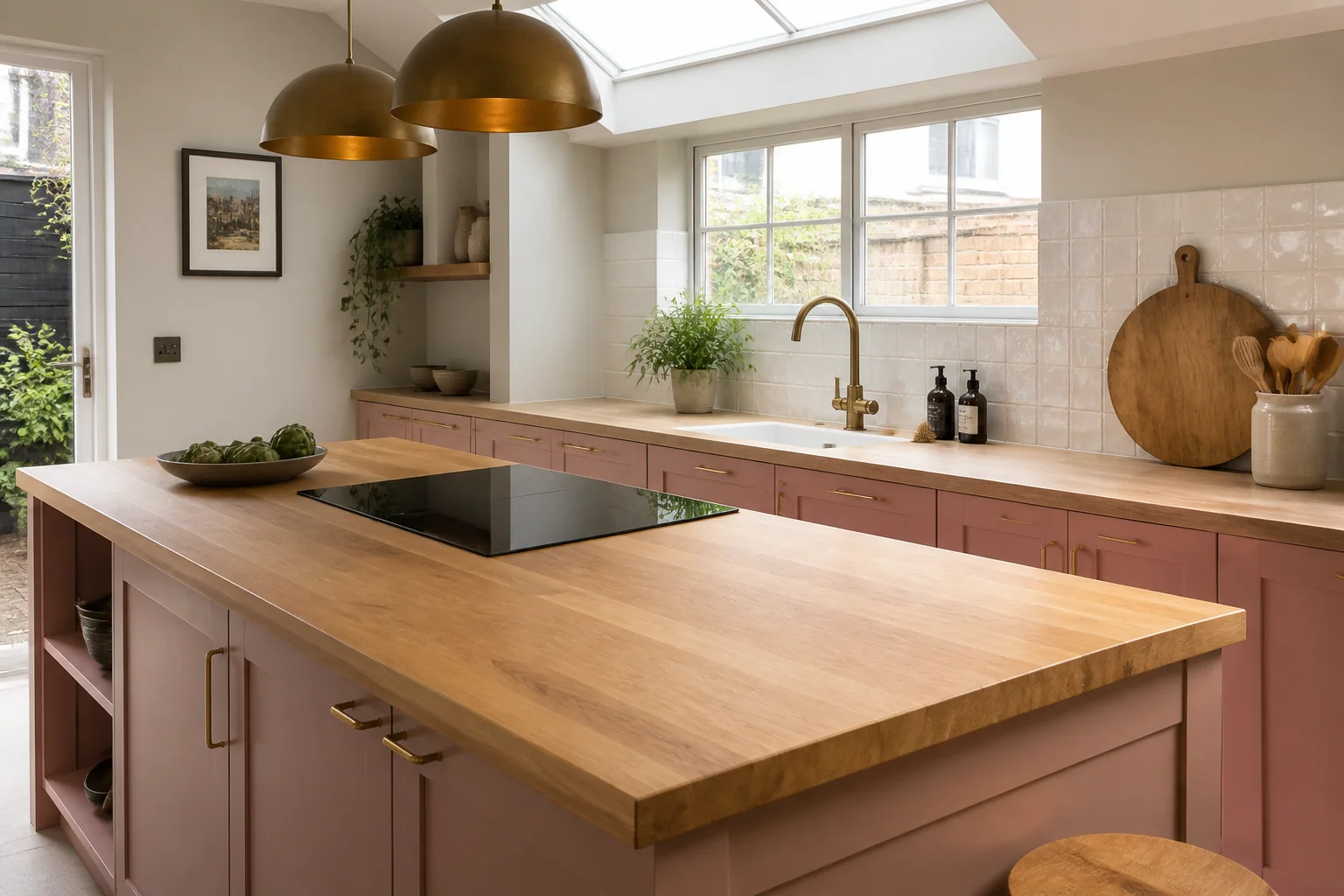
Honest pros. Warmth and character that engineered surfaces cannot match. It is the most repairable surface here: scratches, stains and burns can be sanded and re-oiled locally. It can last 20 years or more when cared for.
Honest cons. Water-resistant, not waterproof. Standing water around sinks and exposed end grain is the main risk. It needs trivets, chopping boards and periodic re-oiling, and it moves with humidity.
Best for: traditional and shaker kitchens, breakfast-bar accents and owners happy to maintain it.
Typical UK installed price: £200–£450 per linear metre — roughly £800–£1,800 for a 4-metre kitchen.
Solid surface — the seamless one
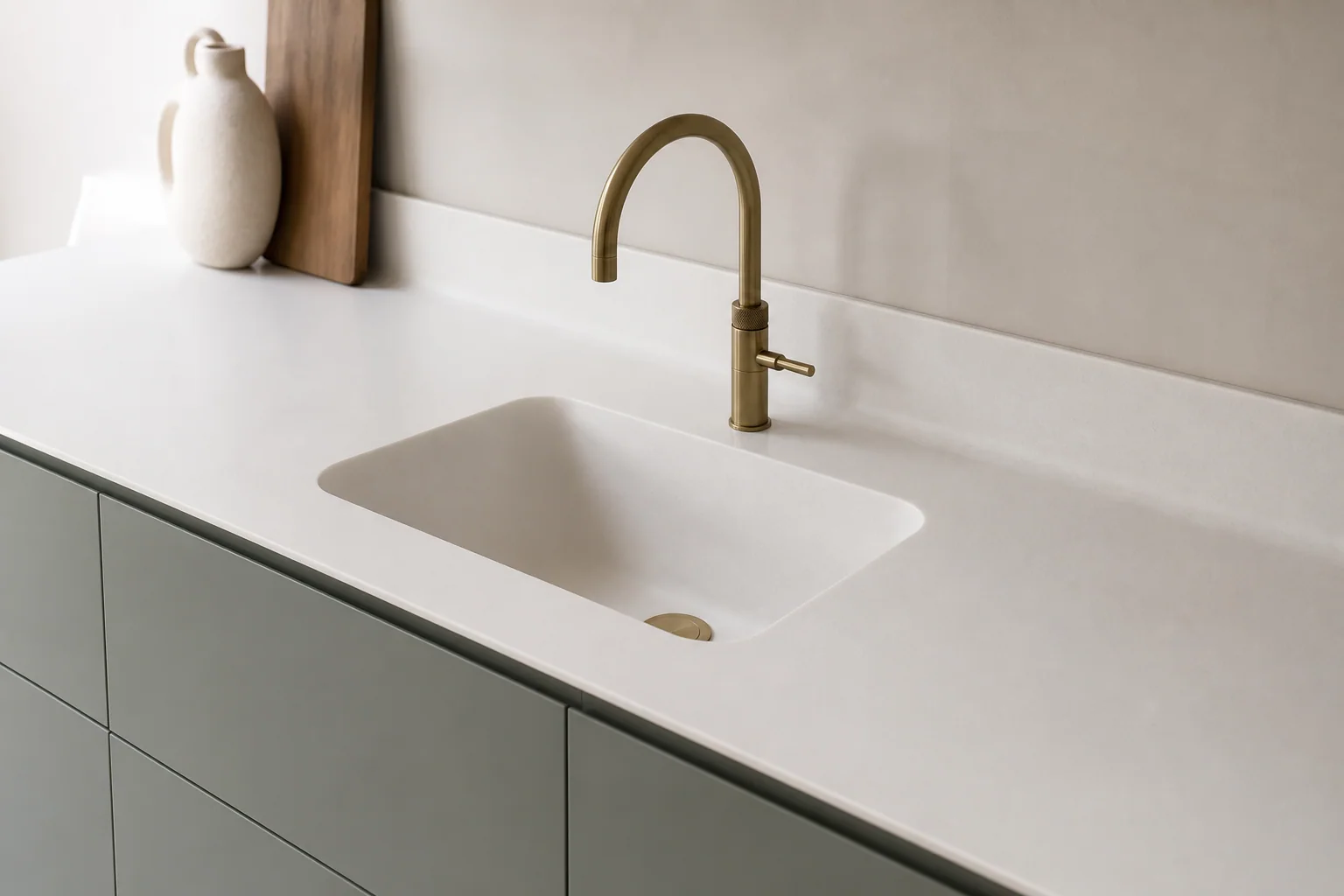
Honest pros. Non-porous acrylic-mineral material with discreet joins, coved upstands and integrated sinks. Scratches and scorches can often be professionally sanded out on site. A realistic lifespan is 20 years or more.
Honest cons. It scratches more easily than stone; dark colours show wear; and direct heat can scorch it. Seamless means joins are discreet, not that the entire kitchen arrives as one piece.
Best for: minimalist designs, long runs, curves and integrated sinks; owners who value repairability over maximum hardness.
Typical UK installed price: £300–£650 per linear metre — roughly £1,200–£2,600 for a 4-metre kitchen.
Laminate — the honest budget answer
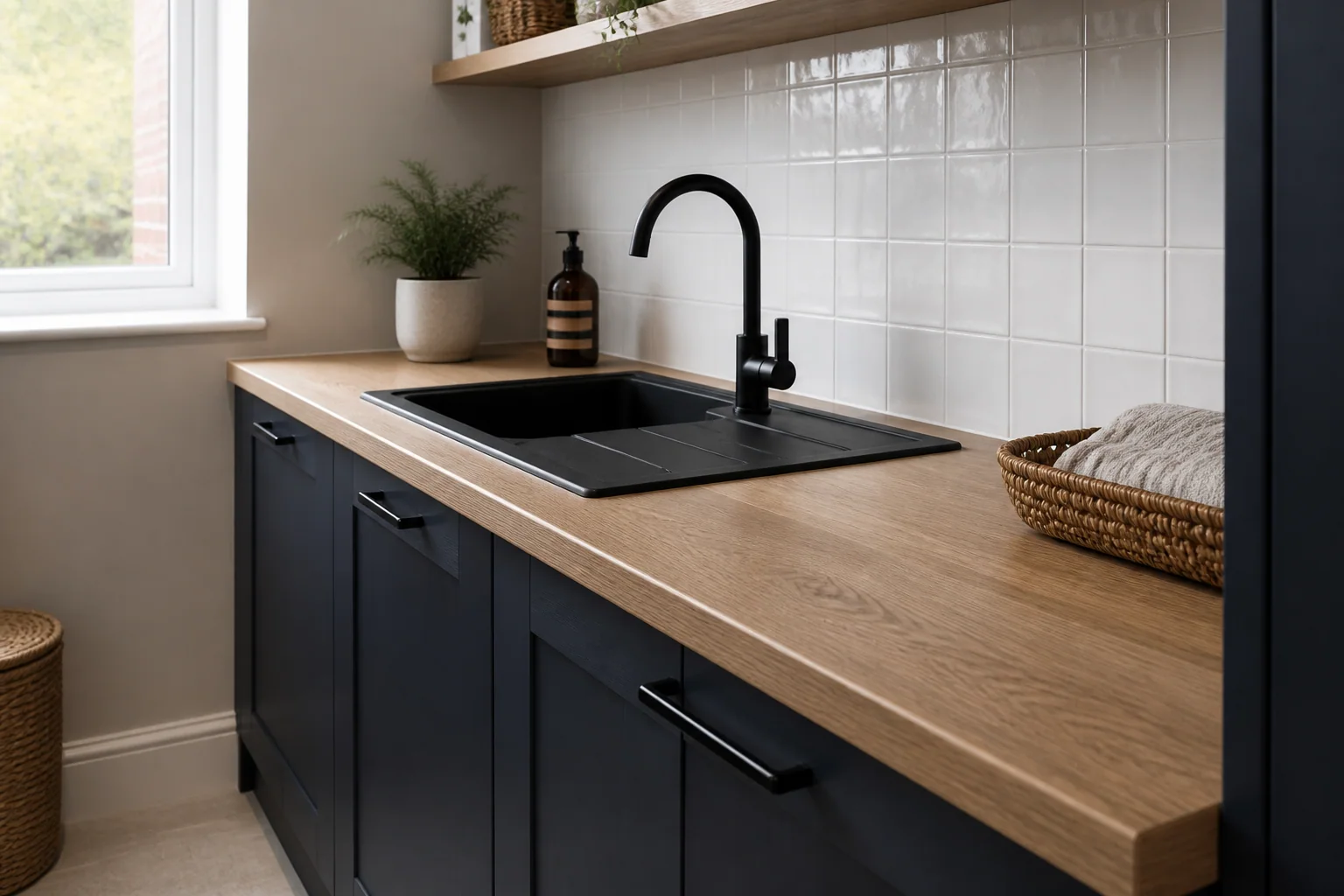
Honest pros. The widest choice at the lowest price. Modern ranges imitate stone and wood convincingly at normal viewing distance. It is easy to clean, needs no sealing or oiling and avoids a separate templating stage.
Honest cons. The face is water-resistant but the chipboard core is not. Moisture in an unsealed joint or sink cut-out causes permanent swelling. Knives mark it, heat scorches it and serious damage means replacing the section.
Best for: tight budgets, rentals and utility rooms — where a great laminate honestly beats a cheap stone.
Typical UK installed price: £100–£250 per linear metre fitted — roughly £400–£1,000 for a 4-metre kitchen.
Quartz and granite, side by side
| Material | Durability | Heat | Maintenance | Look | Installed cost per metre |
|---|---|---|---|---|---|
| Quartz | Excellent; edges can chip | Always use a trivet | None | Consistent, wide range | £350–£900 |
| Granite | Excellent | Excellent | Seal only if the stone needs it | Unique natural slabs | £300–£700 |
| Porcelain / sintered | Excellent; protect edges | Excellent | None | Thin and architectural | £350–£1,100 |
| Solid wood | Good and repairable | Use a trivet | Oiling and prompt drying | Warm, natural patina | £200–£450 |
| Solid surface | Good and repairable | Use a trivet | None | Seamless, integrated sinks | £300–£650 |
| Laminate | Good; cannot be repaired | Use a trivet | Protect joints | Best-value variety | £100–£250 |
Price bands overlap: premium laminate can cost more than basic timber, and entry-level quartz can undercut branded solid surface.
What UK kitchens are choosing in 2026
Engineered quartz is the leading choice among UK renovators in Houzz’s 2026 Kitchen Trends Study: 50% of homeowners who upgraded their worktops chose engineered quartz, followed by laminate at 17% and granite at 13%. Veined patterns were chosen by 58% of those upgrading worktops. Among homeowners who added or updated a splashback, 71% chose a slab style. These are survey findings, not a rule for your kitchen.
Quartz vs granite: which should you choose?
For most UK households, quartz. It needs no sealing, gives predictable colour and offers the widest design choice. Choose granite when the individuality of natural stone is the point: every slab is unique, it handles heat better and it has real mineral character. Their prices overlap, so this is mainly a lifestyle decision: quartz for low maintenance and consistency; granite for character and heat tolerance.
How much do quartz worktops cost in the UK?
A realistic 2026 planning range is £350–£900 per linear metre supplied and fitted. For a typical 4-metre kitchen, budget £1,400–£3,600. Very low advertised prices are often supply-only slab prices that exclude templating, fabrication and fitting. A complete quote should identify the exact quartz, thickness and finish; templating and installation; sink, hob and tap cut-outs; edges and joins; upstands or splashbacks; old-top removal; and any plumbing or electrical reconnection.
Replacing just your worktops?
It is often technically possible to replace worktops without changing the cabinets, provided the units are sound, level and strong enough. The sink and hob must be disconnected, the old tops removed and the bases checked before a templated surface is measured. If you only want the worktops replaced, tell us about the room and the kitchen you have; the checks above decide whether it’s a sensible job. If you’re planning a wider kitchen renovation, we can specify the worktop as part of the complete design, supply and installation.
Photos lie about worktops. Samples don’t.
Every material looks different under real light, at full scale and beside the cabinetry around it. At the Arch KBB showroom in Hammersmith you can compare quartz, granite, porcelain and timber samples against door fronts. Bring your kitchen photos and measurements; leave with a more useful shortlist and a clearer idea of price.
Book a free design appointment
323–325 King Street, Hammersmith, London W6 9NH · 020 8741 1589
Kitchen worktop questions
What is the best kitchen worktop overall?
Quartz, for most UK homes: low maintenance, strong stain and scratch resistance, predictable design and a long useful life. Porcelain handles heat better but costs more and demands specialist fabrication.
Can you put a hot pan directly on quartz?
No. Concentrated heat can damage the resin. Use a trivet for pans, trays and appliances that run hot underneath.
Does granite need sealing every year?
Not necessarily. Some granite needs no sealing; other stones gain stain resistance from it. Follow the advice for your specific slab rather than a blanket annual rule.
What are the pros and cons of porcelain worktops?
They have very low porosity, superb heat resistance, no sealing and thin profiles. The trade-offs are price, specialist fabrication and exposed edges that are harder to repair invisibly.
Solid surface or quartz — which is better?
Choose solid surface for discreet joins, integrated sinks and repairability; quartz for stronger everyday scratch resistance and a stone-like appearance. Both still need trivets.
Can I replace worktops without replacing my cabinets?
Often yes, if the cabinets are sound, level and able to carry the chosen material. Check exactly what removal, cut-outs, templating, reconnection and waste costs are included.
Which is more expensive, quartz or granite?
They overlap almost completely. Our planning ranges are £350-£900 per linear metre for quartz and £300-£700 for granite, supplied and fitted, so the cheapest granite is cheaper than the cheapest quartz but a premium granite will cost more than a mid-range quartz. Price is rarely the deciding factor between these two.
Will the joins show on a quartz or granite worktop?
Any worktop longer than a single slab needs a join, on both materials. Quartz joins are usually more discreet because the pattern is consistent; granite joins are more visible because the veining changes direction. Ask to see where the joins will fall before you agree the specification.